Friday, January 22, 2010

DOIN' THE YO YO + A LITTLE TOUCH OF TEDDY
posted by O.W.


Richard's People: Yo Yo (O-Dub's Extended Intro Edit)
From 7" (Tuba, 1968)


When Doc Delay came through to spin the other month, he dropped this in the middle of a funk mix and trainspotter as I am, I craned my neck over to ask: "wtf is this?" It sounded like the unruly love child of a Midwestern funkateer backed by an East Harlem band and as I dug around for more info on its background, turned out I was more or less on point.

While the 7" came out of Detroit (rumor is, the vocalist was a janitor at Tuba Records), the backing track originated in New York which probably explains why the dip into the shing-a-ling has a distinctive Nuyorican sabor on it. Boogaloo fiend as I am, I love where Latin boogaloo comes back to the Midwest (where the booglaoo was born). It's very post-modern before anyone was talking about post-modernity(ok, I'm hella nerding out right now) but all you need to know is that "Yo Yo" rocks. Sure, it's a derivative track in terms of being a "new dance" that also borrows from any number of hit songs from the same era such as the "Cool Jerk" and "Here Comes the Judge." (Again, pastiche! Collage!) Plus, all that and a breakbeat intro? Oh hells yes. (Personally, I'd love to see how the "Yo Yo" is done; sounds like fun.)

(See also Funky16Corners' excellent exploration of the single's history).

This is jarring gear shift but I'd be remiss in not taking the time to mourn the passing of Teddy Pendergrass, gone far before this time (which is about 99% of the great ones, no?).


Teddy Pendergrass: Love TKO
From TP (Philly Int'l, 1980)


All-time, end of night, slow jam, red light classic (though I suppose "Close the Door" is the king seduction song even more).

King Kong: The Love I Lost
From Funky Reggae (MFP, 1970s)


Just played this out last night and cotdamn was this Harold Melvin and the Blue Notes (feat. Teddy) such an incredible jam, made all the more enticing in this reggae-fied remake.

Labels: , , , , , ,


Thursday, December 10, 2009

LATIN CON ALMA: A NEW COLUMN FOR FANIA.COM
posted by O.W.


I just launched a new column for Fania's revamped website called "Latin Con Alma." It's part of their regular blog (and thus doesn't have a dedicated page) but I'll update folks here when a new one goes up.

My first three posts are all about the history of Speed Records. I've been researching them for Wax Poetics and wrote these posts as a beginner's guide of sorts to this small but popular Latin soul label. The formatting at Fania is still being worked out so I decided, for this post at least, to reprint what's there:
    The Speed Records Story, Part 1 of 3

    Speed Records was founded by Stanley Lewis around 1967/8 following an exit from Cotique Records, the Latin label that Lewis had run with partner George Goldner. Lewis started Speed along with with producer Morty Craft (who had never worked extensively in Latin prior) and Bobby Marin, the prolific Latin music songwriter/producer. Marin served as label’s informal A&R man and he helped bring aboard the accomplished player, composer, and arranger Louie Ramirez and together, along with bandleader Luis Aviles, they formed the nucleus of the Latin Blues Band. Their Take a Trip Pussycat became Speed’s first LP release and its innuendo-laden jokes about sex and drugs were a sly indication of the group's salacious sense of humor. Even in the cover art, which looked a visualization of an acid trip (but actually hid a naked woman), the album suggested a new team was in town.

    The best-known song off The Latin Blues Band album was “(I’ll Be a) Happy Man,” a fast, late-era boogaloo featuring the funky drum breaks of studio session player Bernard “Pretty” Purdie, a colleague of Ramirez’s. (“Happy Man,” had a curious life span, as it was remade into "Happy Soul," an instrumental for The Moon People’s Land of Love album on Speed, then was remade again as “Happy Soul With a Hook,” this time featuring organist Dave Cortez and then that version was stripped down slightly and released as “Hippy Skippy Moon Strut” by the Moon People, but for Roulette. Decades later, DJ Premier would sample it for Christina Aguilera’s hit, “Ain’t No Other Man.”)

    The second Speed LP is the most enigmatic: Dianne and Carole with the Latin Whatchamacallits’ Feeling The Pain. One of the very few female-lead New York Latin albums of that era, the LP itself offered no details of who Dianne and Carole were (not even their last names) nor who played on it. Marin is credited for some of the songwriting but even he doesn’t remember working on it or who else may have. Subsequent interviews with other Speed artists yielded no other details either. Given that the LP cover was a close-up of an eyeball (the first three Speed LPs were all fairly abstract in their cover art), we don’t know what they looked like. Regardless, “The Fuzz” off that LP has become its best known single; a slinky Latin soul number with vibrant organ and horns.

    Like Dianne and Carole, the Moon People were no less mysterious - or, at least, strange. Though not completely identical, their Land of Love album was essentially an instrumental variation on the Latin Blues Band's album - Morty Craft produced them as well and Louie Ramirez wrote the arrangements. The “Moon People/Los Astronautas” moniker was a Marin invention, reflecting the underlying sense of humor amongst Speed’s principals. The album sounded like a subtly, Latin-flavored version of any number of pop instrumental/exploitation albums, especially with covers of such hits as the Turtles’ “Happy Together,” Little Anthony and the Imperials’ “Going Out of My Head” and The Monkees’ “Last Train to Clarksville.” The album’s most distinctive songs would be the originals, including “Monty’s Harem,” built around a catchy mod-groove. 

    In Part 2, we’ll look at the next four releases on Speed, all from young, up-and-coming bandleaders. In Part 3, we’ll talk about the label’s singles, latter day projects, and the missing-in-action recordings.


    "I'll Be a Happy Man"


    "The Fuzz"


    "The Harem"


Labels: ,


Tuesday, October 6, 2009

SUPER SONIDO SWAPS SOME SOUL
posted by O.W.


Johnny Rivera and the Tequila Brass: Johnny on the Warpath
Boogaloo Que La Traigo
From S/T (Cotique, 1967)

Johnny Rivera and the Tequila Brass: Run, Run, Run
Light My Fire
From Up, Up and Away (Cotique, 1968)


(Editor's Note: Super Sonido is one of my favorite new blogs to hit the interweb. Excellent, in-depth posts about kick ass Latin music most of you will never hear outside of a plane ticket down south. Me and Sonido Franko decided to swap a pair of posts. Here's his... -O.W.)


It isn’t any wonder that in late 1990’s I started harvesting a deep appreciation for the Latin boogaloo. I already had a good sized soul, jazz, and Latin jazz collection by then. So a cross-over music like the boogaloo, which fused these similar genres together, drove me to a fascination with hybrid music that pretty much lasts to this day.

By the mid-60’s Latin music in the US was losing its popularity that it had garnered from the mambo era onward. Rock, doo-wop, R & B, and The Beatles had pretty much taken over the Anglo youth market. And what emerged was the very short lived boogaloo craze. One the one hand you can almost look at this genre as a really good marketing ploy. However, this association doesn’t stick all the time. Musically, there are no absolute definitions for the boogaloo, since it was drawing for a myriad assortment of sounds. And it is my belief that it was just the younger Latinos of the time who were carving out something unique in 60’s urban US. Like mambo in the swing era to reggaeton in the hip-hop era. Boogaloo in essence was the music as Latin American identity of its brief epoch.

When I purchased Up, Up, and Away on Ebay in the late 90’s I was surprised to actually get an email from Johnny Rivera himself. We corresponded for a while, but I unfortunately lost his email in one of the many computers I have burned through since then. If I remember correctly his boogaloo days lasted as long as the genre itself. He indicated that he spent the rest of his days as the conductor for the Statue of Liberty Army Band or something like that. Why did Johnny Rivera contact me in the first place? He wanted to know why I would have paid so much for his record. I’ll let the music be the answer to that question.

--Sonido Franko


Labels: , ,


Thursday, February 26, 2009

JOE BATAAN: KING OF LATIN SOUL
posted by O.W.


Joe Bataan: Subway Joe
Joe Bataan: The Bottle (snippet)
Joe Bataan: Puerto Rico Me Llama (snippet)
All from King of Latin Soul (Vampisoul, 2009)


A few months back, Joe mentioned that he was working on some new projects, including an album with the Barcelona band, Los Fulanos. The album is finally here - King of Latin Soul and like Joe's last album, Call My Name, it's coming out on the Spanish label, Vampisoul.

(Contrary to rumor, this new album was not recorded with the same folks who worked on Call My Name).

The album are all updated versions of Joe's classic catalog, spanning from his boogaloo years ("Subway Joe", "Gipsy [sic] Woman" and "It's a Good Feeling" to some of his straight up Latin jams ("Puerto Rico Me Llama"), salsoul era material ("The Bottle"), ballads ("The Prayer"), even an update on "Rap-O Clap-O 2008."

Take a peek and let us know what you think.

(By the way, I think it should get American distribution in a matter of weeks).

Labels: , ,


Sunday, February 15, 2009

JOE CUBA: RIP
posted by O.W.


Update (2/17): I wrote a short piece for NPR.com on Cuba's music, including a five song playlist of some of his key recordings. Check it out here.


Update (2/17): (from Beto) "Joe Cuba will be viewed at the R&G Ortiz Funeral Home.

Wednesday & Thursday, February 18th & 19th from 2 to 10 p.m.

A funeral mass service will be held Friday morning at 11 a.m. at St. Paul's
Church located @ 213 E. 117th Street, between Park & Lexington."


This one really hurts; Joe Cuba is one of the main reasons I ever developed an interest in Latin boogaloo and now he's gone.

Cuba had a tremendous career in the New York Latin scene, easily one of the most important figures in the post-mambo era as both one of the pioneers in Latin soul and boogaloo and then transitioning into the salsa era.

I had been meaning to do a post on the "best of" Joe Cuba and I'll try to get that in gear sometime this week. In the meantime, enjoy this:

Joe Cuba: Hey Joe
From My Man Speedy (Tico, 1967)


Labels: , ,


Thursday, October 9, 2008

THE SOUL SIDES' "UNDER COVERS" MIX FOR DUBLAB.COM
posted by O.W.


I recorded this mix for Dublab.com back in June and is now available on their website archive. I originally created it as a promo mix for Deep Covers 2 (though the timing was off since Dublab was back-logged over the summer). Still, I put in a nice selection of different cover songs here - some you've heard, some you haven't. Here's the tracklisting:
    Simply Red - I Know You Got Soul - You’ve Got It - WEA

    James Brown: Your Cheatin’ Heart - Soul On Top - King

    Jimmy McGriff - Ain’t It Funky Now - SOul Sugar - Groove Merchant

    Bo Diddley - Bad Side of the Moon - Another Dimension - Chess

    The Gimmicks - California Soul - Em Las Brisas - Swedisc

    Klaus Wunderlich - Summertime - Hammond Fur Millionen - Telefunken

    The Professionals - Theme From Godfather - On Tour - CES

    Dutch Rhythm Steel and Show Band - Down By the River - Soul, Steel and Show - Negram

    Byron Lee and the Dragonaires - Express Yourself - Reggay Splashdown! - Dynamic

    Charles Wright and the Watts 103rd Street Rhythm Band - Movin’ On Up - Live at the Haunted House - Rhino Handmade

    Hielo Ardiente - Mensaje (The Message) - Ritmo Ardiente - Dicesa

    Al Escobar - Tighten Up - The Modern SOunds of Al Escobar - Tico

    El Freddy Flaco - K-Jee - La Fiesta Vol. 2 - FTA

    Manny Bolone and His Latin Boys - Micaela - Boogaloo - Boogaloo

    Conjunto Universal - Que Se Sepa - Que Se Sepa - Velvet

    Enrique Lynch - Viva Tirado - Sexympacto - Sono Radio

    Wganda Kenya - El Abanico - COmo Se Hace Ah - Fuentes

    Alton Ellis - What Does It Take To Win Your Love - Sunday Coming - Coxsone

    Sparrow’s Troubadours - Soulful Strut - Hot and Sweet - Hilary

    Joe Bataan - More Love - Singin’ Some Soul - Fania

    Margie Joseph - Let’s Stay Together - S/T - Atlantic

    Rhetta Hughes - Light My Fire - Re-Light My Fire - Tetragammon

    West Coast Revival - Feelin’ Alright - S/T - LAX

    Hodges, James, Smith and Crawford - Nobody - 7″ - Mpingo

    El Alamo - Candy - Malos Pensamientos - Decibel

    Donovan Carless - Be Thankful FOr What You Got - 7″ - Impact

    Nancy Holloway - Never Can Say GOodbye - 7″ - N/A

    Mark Holder - Sweet Caroline - Where THere’s a Will, There’s a Way - Deriva
And just because I wanted to be a good egg - I created a downloadable version of the mix, split into individual tracks (but no IDs written; I'm lazy - deal).

Enjoy! Hopefully I'll be rolling back to Dublab to do another mix soon.

Labels: , , , , , , , , , ,


Monday, October 6, 2008

BOOGALOO CHECK: 1, 2
posted by O.W.

I was on WNYC's Soundcheck earlier today, talking about boogaloo since my essay on it for The Nation was included in this year's Best Music Writing 2008. Peep.

For those in Los Angeles, I'll be reading from the essay this Friday, at Skylight Books in Los Feliz.

Labels:


Thursday, October 2, 2008

LATIN PARTY STARTERS
posted by O.W.


Someone recently wrote to ask: "You've eluded[sic] to a few of your [Latin music] favourites a couple of times, I was hoping you'd share more of your all time best with us."

That seemed like a perfectly fair request so I set out to think how I'd approach answering it. For one thing, I've actually posted up a few of them over the years and I went back to a few old posts and reattached missing sound files. That will get you these three basic - but essential - Latin dance tunes:

  • Joe Cuba: Bang Bang
  • Ray Barretto: Acid
  • Willie Colon: La Murga

    As noted - these are basic insofar as they're well-known but not having them in your crate is like professing a love for funk and having no James Brown.

    I had also written about these next two songs in the past but by past, I mean as far back as four, even five years ago and I thought it was worth coming back to them here, just to refresh people's memories.

    Roberto Roena y su Apollo Sound: Que Se Sepa
    From 5 (Fania, 1975)


    Quite possibly my favorite Latin track ever. It's such an amazing mix of styles here, opening with that fantastically funky rhythm before shifting into a stripped down rumba which then turns into an incredible guaguanco section. This is as pure a dancefloor track as you could wish for. Not surprisingly, of all of Roena's many songs (and he has a ton), this is probably his best known by far.

    Mauricio Smith: Viva Guajira
    From Bitter Acid (Mainstream, 1967)


    I'd put this up as one of the best produced Latin albums Joe Cain ever laid hands on (and that's saying a lot given Cain's track record). It's not often you see a saxophonist heading up a Latin album but Mauricio Smith does excellent work here, especially on "Viva Guajira" which is one of the more upbeat and joyful guajiras you're likely to lay ears on. The way this song opens - with the piano progression and antiphonal chicken-scratch guitars - never grows old for me.

    Ok, onward to songs not previously spoken about...

    Monguito Santamaria: Groovetime
    From Hey Sister (Fania, 1968)


    I'm genuinely amazed I never put this on Soul Sides before; must have been my oversight in thinking I already had. This was probably the song that got me interested in boogaloo and hence, Latin music writ large. It's that bassline - it'd catch your attention in any genre - and the the swing and swagger of Monguito on here sells how deliciously groovy and funky the whole affair is. Monguito was Mongo's son though he never came close to enjoying the same popularity. He could, at least, lay claim to being one of Fania's best boogaloo artists during the era and the way he pulls "Groovetime" together suggests why.

    One more boogaloo banger:

    Orchestra Harlow: Freak Off
    From El Exigente (Fania, 1967)


    Larry Harlow has to be one of the most interesting players in the New York Latin scene. He was hardly the only Jewish player in the mix but he was the most visible bandleader and overall talent. Heck, his nickname was "El Judio Maravilloso," (the marvelous Jew). Harlow's catalog in the '60s/'70s era runs deep but despite an impressive catalog of songs, you'd be hard pressed to find one more incredible than "Freak Off." I was trying to think of boogaloo songs with this level of energy and outside of some of Ray Barretto's material, I'm not sure there is one.

    Fruko Y Sus Tesos: Confundido
    From El Grande (Fuentes, 1975). Also on Grandes Exitos de Salsa Vol. 2


    My fondness for Fruko's Colombian take on salsa is well-known and there's no way I could come up with a list of my favorite Latin tracks and not have him on here at least once. I cycle through which song of his I'm into the most at any given time and this isn't necessarily the best song in terms of the vocals but for musical content, "Confundido" kills with that powerful, rolling piano riff that opens the song (that and the brass section which lights up the track too).

    Pedro Miguel y sus Maracaibos: Descarga Maracaibo
    From La Paila (Lider, 196?)


    The last track I'll include here is from one of the bigger names in Peruvian Latin music and while this more of a "listening" cut than something to blow up the dancefloor, I'm feeling how it begins with its folksy vocals that then give into this nimble guitar treatment that's brisk without being overpowering. These days, this is the kind of Latin that I've found most appealing. Hope you do too.


    Labels: ,


  • Monday, September 8, 2008

    JOE BATAAN GIVEAWAY! (UPDATED)
    posted by O.W.


    Common feat. Bilal: Play Your Cards Right
    From Smokin' Aces soundtrack (Lakeshore, 2007)

    Joe Bataan: Under the Street Lamp
    Available on Under the Streetlamps: The Joe Bataan Anthology 1967 - 1972 (Fania/Emusica, 2008)


    Joe Bataan was just here in Los Angeles the last week or so (and I feel stupid for not posting up links to his performances) and we caught up twice during that time, including one meeting where he broke down the entire history behind "Rap-O, Clap-O". Fascinating stuff and I'll have to try to write that up sometime.

    Anyways, the other time we met, he was asking me if I knew anything about this Common song that sampled one of his songs. Joe had gotten a check for the clearance but hadn't heard the actual use of the song yet. Not having really followed the sampling game that closely of late, I couldn't think of anything off the top so we sat down and googled it and sure enough, it was Common's "Play Your Cards Right" from last year's Smokin' Aces soundtrack. And once you hear it, it's plain as day that producer Kareem Riggins had looped up Joe's great "Under the Street Lamp" (from his Singin' Some Soul album originally). (Joe got a kick out of hearing his song sampled).

    He was also gracious enough to sign a copy of his anthology that I did the liner notes for and I'm going to give this away to one lucky (and informed) reader.
    DETAILS AFTER THE JUMP


    To be eligible, send an email to soulsides AT gmail.com with the subject line "Joe Bataan giveaway." You need to answer the following:
      1) What Latin producer of Alegre fame did Joe Bataan record with prior to signing with Fania?

      2) How many original albums (not including compilations or reissued content) did Joe record for Fania (this is a trick question of sorts so think it through carefully)?

      3) Some of Joe's most successful songs have been covers: "Gypsy Woman, "Shaft," "The Bottle." Name the original artists behind these other Joe Bataan songs:
      a. "It's a Good Feeling (Riot)"
      b. "I'm No Stranger"
      c. "Make Me Smile"

      4) What Ismael Miranda boogaloo mash-up/cover of "Tighten Up" does Joe Bataan make a cameo on? Name the song and album.

      5) What pseudonym did Joe take on when he recorded for Bobby Marin's Dynamite label?

      6) Two different songs that Joe recorded earlier in his career ended up re-released on later albums in their intact (i.e. non-rerecorded) form. One was "Ordinary Guy" - the same version appears on both Riot and Singin' Some Soul. What is the other song and which two albums did it appear on?

      7) What classic from Joe's repertoire appears on his Salsoul album, but with a different name?

      8) What's different about the 7" version of "Woman Don't Want to Love Me" compared to the LP version from Afrofilipino (be specific)?

      9) What old school rap duo was supposed to appear on "Rap-O, Clap-O" instead of Joe rapping himself?

      10) What martial art are Joe's children all masters of?
    I'll select a winner at random from those with the most correct answers. Deadline: next Monday.

    I also have a second (unsigned) copy of the anthology to give away, randomly, to those who buy Deep Covers 2 in the next week. (Physical CD orders only, digital downloads don't apply, sorry).


    Labels: , , , , ,


    Thursday, August 7, 2008

    JOE BATAAN: THE LOST SIDES
    posted by O.W.


    Joe Bataan: Gypsy Woman (original, Futura version) + Latin Soul Square Dance
    From Under the Streetlamps: 1967-1972 (Fania, 2008)


    I'm very, very proud to announce the new Fania anthology focused on the work of Joe Bataan, Under the Streetlamps. I was fortunate enough to be asked to write the liner notes for the compilation - you can read a teaser here - and as always, it was a pleasure to rap with Joe but also my first opportunity to speak with the great Bobby Marin as well.

    I've, er, waxed poetic about Joe on numerous occasions, especially here, so I won't add a great deal (though look for my Side Dishes post this week to go over some of the basics). I do want to bring attention to the two songs above though, both of which are important inclusions on the anthology. The "Gypsy Woman" version here is quite a find since it's never been released previously and very few people have ever heard it before. Futura was Al Santiago's (Alegre) short-lived label and a truly missed opportunity since Santiago recorded both Joe and Willie Colon at a time when no one in the Latin music world had really heard of them but he never capitalized on their potential. This version of "Gypsy Woman" is markedly different from the Fania version; it's quite slower which gives it a very different feel. Maybe it's just familiarity but I think the eventual version is better than this early attempt but just for history's sake, it's cool to hear the first try.

    "Latin Soul Square Dance" comes from the opposite end of Joe's Fania career. This was never released as a commercial single (just promo only) and it's from Joe's "lost" Live From San Frantasia album from which the masters are still MIA and may never be found. It would have come out had Joe not finally stepped off of Fania (with whom he was having issues with at the time) and went on to help found Salsoul Records with the Cayre Bros. Again, a really cool track to include since so few people have ever heard it. Enjoy!


    Labels: , ,


    Monday, July 14, 2008

    PICK SIX: LOUIE LOUIE
    posted by O.W.


    Louie Ramirez: The New Breed
    From In the Heart of Spanish Harlem (Mercury, 1967)

    The Latin Blues Band: Oye Mi Guaguanco
    From Take a Trip Pussycat (Speed, 1968)

    Dianne & Carole: The Fuzz
    From Feeling the Pain (Speed, 1968)

    Kako and His Orchestra: Shingaling Shingaling
    From Live It Up (Musicor, 1968)

    Jose "Cheo" Feliciano: Esto Es El Guaguanco
    From Cheo (Vaya, 1971)

    La Crema: Cisco Kid
    From El Party Con La Crema (WS Latino, 1973)

    Bonus: Beatfanatic: Cookin'
    From Adventures in the World of No-Fi Beats (Raw Fusion, 2006)


    My most recent Side Dishes was on Latin arranger/composer/musician Louie Ramirez and the recommended Louie's Grooves anthology. I've been wanting to write something on Ramirez for a while and though the Side Dishes post allowed me to riff on some of his work, as the comp's liner notes acknowledge, it just brushes the surface of how deep his catalog can run. I'd suggest folks read that post first and then come back here.

    My pick six for Ramirez focuses mostly on albums not already covered by Louie's Grooves, beginning with arguably the easiest of his solo albums to acquire: In the Heart of Spanish Harlem. This was recorded for Mercury; I find that interesting since Mercury didn't have a ton of Latin recordings (that I know of) on the label but I suspect it may have had something to do with producer Richard Marin who was doing some A&R work for labels like Mercury and Verve at the time. Marin's brother Bobby - another Latin soul giant and fellow composer - is on this album as well; he was a frequent collaborator with Ramirez and it's not at all unusual to see them on the same projects together. In fact, for this album, Bobby appears on the cover photo alongside Richard and Louie

    I was always struck at how Ramirez was able to work on so many different labels at the same time; not long after that Mercury album, he must have been working with Fania on the Ali Baba LP (several of the songs from that rare title are on Louie's Grooves and then he was also working for Morty Craft's Speed imprint. I wrote about The Latin Blues Band for the Happy Soul Suite piece and I enjoy revisiting it - any Latin album that has Bernard Purdie as your studio drummer is bound to be rather interesting though instead of the funkier fare I could have nodded to, I went with "Oye Mi Guaguanco," a solid piece of classic Cuban style by Ramirez, feat. (I think) Luis Aviles on vocals.

    Like the Latin Blues Band, the Dianne and Carole album was also on Speed. Speed packed, in my opinion, the biggest bang for the buck - their catalog wasn't more than a dozen titles or so but what was there was almost all exceptional. This Dianne and Carole album is especially notably since it had one of the few examples of female singers heading a Latin soul album (La Lupe excepted of course). There's very little known about the two singers - their surnames aren't even credited on the album! In any case, "The Fuzz" leads side 2, where 4/5 of the songs are arranged by Ramirez and I suspect that most of the same players from the Latin Blues Band played on here as well.

    Not long thereafter, Ramirez was also helping compose, play on (and possible arrange?) for the great Puerto Rican bandleader Kako and his Live It Up album on Musicor. Personally, I've never figured out what separates a shingaling from a boogaloo and "Shingaling Shingaling" certainly displays many of the stylistic characteristics of both. I'm feeling this - and the whole LP is exceptional.

    Ramirez was multi-talented as a musician - known to rock both the timbales and vibes - and I wanted to include an example of the latter by including one of his salsa era performances, playing vibes on Cheo Feliciano's classic "Esto Es El Guaguanco." He's a big reason the opening is so memorable and Ramirez comes back to solo towards the second half of the song.

    Last in the pick six is this cool lil cover of "Cisco Kid" that Ramirez arranged for the La Crema album, a one-off project that involved him, Bobby Marin and some other familiar folks but in the Latin funk era of the 1970s.

    Bonus: As for "Cookin'", that might have been the first time I "heard" any Louie Ramirez song since it liberally borrows from "The New Breed." Slammin' Latin club cut - trust me on this one.


    Labels: ,


    Monday, May 12, 2008

    MAMBO MONDAY CON LA PLAYA
    posted by O.W.


    bailando.JPG vaya.JPG exciting.JPG

    La Playa Sextet : Hong Kong, Hunca Munca, Olaya & El Chico Boogaloo
    taken from the album
    Bailando El Boogaloo on Musicor (1967)

    La Playa Sextet : Le-Lo-Lai & Sugar's Delight
    taken from the album
    Vaya Means Go! on United Artists (196?)

    La Playa Sextet : Coco Seco/Anabacca & Mambo Inn
    taken from the album
    The Exciting New La Playa Sound
    on United Artists (196?)

    I felt inspired to give
    La Playa (even THEY have a myspace page!) their due respect for several reasons. The first is selfish: I've been carrying these records in my crate consistently, week-in week-out, for probably a year now, and before I wear out the grooves on my favorite tunes, I wanted to retire the vinyl properly and let the music itself live on forever in digitally-preserved mp3/serato heaven. The second reason is because I'd also like to start doing a regular feature on somewhat overlooked latin groups. "Dura Obscura" or something like that. If I highlight a big name artist like Tito Puente or Eddie Palmieri, I'll pick out something that is a bit lesser-known from their catalogue. La Playa seemed like as good a place as any to start. Chronologically, they rose to popularity on the Latin tidal wave that crashed in 1968 with the death of the Boogaloo and the subsequent birth of "Salsa" superpower Fania. Cha-cha, Charanga, Mambo, Bomba, Bolero all got branded conveniently under one banner, and La Playa somehow didn't make the grade.

    Most of what little I know about La Playa I picked up
    here and here. But without knowing about all the players and particulars, one of the major aspects of the group's sound that stood out to me from the start, and caused me to seek out other titles, is the killer electric guitar playing by Payo Alicea. Beyond simply taking over the montuno parts traditionally played on piano, Payo really steered the sound of the group in a latin-rock direction (pre-Santana). "Hunca Munca" has that classic bluesy rock progression that sounds pretty dated today (maybe even tacky to some), but back then I imagine this was some pretty progressive stuff. I'm not sure what happened to the group after "Bailando.." was released, but their music is still heating up dancefloors here in Brooklyn on a weekly basis.

    Labels: , ,


    Tuesday, May 6, 2008

    BACK FROM THE CRAZY HORSE
    posted by O.W.


    As noted, I went to go see Joe Bataan play the Crazy Horse in West Covina. It was cool insofar as there were a lot of older, hardcore fans of his who rolled through and that's always great to see. But for once, I'd like to see him play a venue where the average age isn't 42 - he deserves a wider audience but so far, promoters out here in Los Angeles seem to only book him in places where things skew considerably older. If someone wants to help me work on this, holler.

    A small, unexpected, very pleasant surprise: at the beginning of the show, Joe came into the audience and was handing out photocopies of this. It reminds me: I really should scan the original in since the issue is sold out.

    In the meantime, enjoy these:

    CONTINUE READING...


    Labels: , ,


    Friday, May 2, 2008

    (EXTRA)ORDINARY: JOE BATAAN
    posted by O.W.


    First off, for my Angelinos, Joe Bataan is playing at the Crazy Horse in West Covina on Sunday. See you there!

    I recently finished up a set of liner notes for an upcoming anthology on Joe's rich recording catalog for the Fania label. As folks probably know, I'm a huge fan of Joe and it's been a genuine honor to be able to interview him over the years and bring attention to his remarkable career.

    This post is part of the boogaloo series (and I'll do some more closer to the date the comp drops) but was really inspired by what is Joe's best-known song, "Ordinary Guy." It's not just a fan favorite - he's recorded it five times (and released it six) - but it's also a song integral to his own sense of self; he may be a star but in his own mind, he's still just a regular Joe (you saw that coming, right?) From the man himself: "While in prison, we did a lot of experimenting with songs. I had first heard the title “Ordinary Guy” in prison in Coxsackie, so I eventually rewrote the words, came back home, put ‘em to music. The song makes me cry sometimes when I see the reaction of people. In New York, it is so popular. People just love that song, and I guess the words mean a lot. “Hey, I’m just an ordinary guy, don’t expect anything else. That’s me” and I’ve always been that way. Having sung the song and how I have endeared a lot of people, how they felt about it, only influenced me more [to] give more of my heart than almost any other song. It describes me."

    CONTINUE READING...


    Joe Bataan: Ordinary Guy
    From Gypsy Woman (Fania, 1967)


    The original version of "Ordinary Guy" was recorded for Gypsy Woman, Joe's debut album for Fania. He and his band, the Latin Swingers, recorded the album in one single studio session, a relatively unusual practice. By the end of the day, Joe had this - his last song - left to record but his voice was starting to give out. Session engineer (and Fania co-founder) Johnny Pacheco asked, "'Don’t you want to come back tomorrow?’ and I said no," said Joe. "Actually, my fear was that they were going to change their mind and not use it." So, even with his voice at the point of breaking, they recorded this and completed the entire album that day.

    Ordinary Guy
    From 7" (Fania, 1967)


    For reasons not entirely clear, Fania decided to re-record the song to release on single. For the most part, this 7" version isn't wildly different from the LP except that Fania brought in pianist Richard Tee. Tee changes the opening to the song, giving it a stronger presence, especially with a striking arrangement that sounds very much like the beginning of Marvin Gaye and Tammi Terrell's "Precious Love." This is probably my favorite version of the song, precisely for that intro which gives the tune such a rich, soulful feel to it. (Thanks to Reynaldo for digitizing).

    Interestingly, at the Crazy Horse show, when Joe sang "Ordinary Guy", he opened it with that same Tee melody.
    Ordinary Guy
    From Riot! (Fania, 1968)


    By Joe's third album, the gold-selling Riot!, Fania convinced him to record the song again, but this time with a dramatic makeover as the song was given a new arrangement by Broadway's Harold Wheeler. Joe admits, "I didn't particularly like it...I love it now but at the time, I just thought he was altering my music because he gave it this jazzy feel. It had to grow on me because I thought it was too fast." This new version, in my opinion, is lovely and a great change-up from the original. Wheeler adds in some vibes, speeds up the tempo a bit, and has Joe open with some soaring vocals and well-timed drum hits.

    It's worth noting, Fania put this same recording - albeit longer by a few seconds - onto Joe's Singin' Some Soul album. I'm guessing it's because they thought it'd fit well with the concept of that album. That would be the last time Joe recorded "Ordinary Guy" for Fania.

    Muchacho Ordinario
    From Salsoul (Mericana, 1973)


    The next incarnation of the song is perhaps the most unique: a Spanish-language version that appeared on Joe's first post-Fania album, Salsoul. The arrangement is completely different too - here, the song isn't really in the R&B vein, it's much more like a son montuno. Bueno!

    Ordinary Guy
    From Afrofilipino (Salsoul, 1975)


    The final version of the song came on the next album, Afrofilipino. This is a version I know a lot of Soul Sides folks are familiar with - I comped it for Soul Sides Vol. 1. I like to think of it as a bridge version between the Latin-fied flavor of "Muchacho Ordinario" and the more R&B stylings of the earlier versions. The song is more in a soul vein in the beginning but at the end, he yells, "salsa!" and the ballad then transforms into a whirling dance tune.

    Labels: , , ,


    Monday, March 31, 2008

    AY AY AY! MICAELA X QUATRO
    posted by O.W.


    Pete Rodriguez: Micaela
    From I Like It Like That (Alegre, 1967)

    Pedrito Ramirez y su Combo: Micaela
    From 7" (Popo, 196?)

    Los Cinco De Oro: Micaela
    From 7" (Philips, 196?)

    Tone Done's Hollywood Quintent: Micaela
    From 7" (Vance, 196?)


    As promised, here's the first in hopefully many boogaloo-themed posts in honor of the new Soul Sides Boxset #2.

    In general, I've found that Latin soul/boogaloo songs are not always given to covers very well. I'm still not sure why this is - whether it's a failing on the groups covering or something inherent to the genre but, for example, covers of Joe Cuba's "Bang Bang" never sound as good as the original (in contrast, "El Pito" seems to go over better). However, it dawned on me recently that there's another boogaloo classic that might disprove my casual theory: Pete Rodriguez's "Micaela." Not only is the song well-covered - possibly the most of his several hits - but many of the other versions are done competently, often on par with the original. I think that says something important about said original: that it's one of those magical songs that lends itself to multiple permutations, all of which excel simply be referencing back to the original (for another example, see variations on Tito Puente's "Oye Como Va" - a song that can be covered any which way and still sound great).

    I genuinely love this song and how it sounds and have made it a pet project to track down other versions of "Micaela" in hopes of finding yet another charmer. I have to admit though, until very recently, I barely understood it since my Spanish lexicon is limited to, um, counting 1-10 and ordering from taco trucks. That great if I ever need to order "dos tacos, carne asada," not so good for deciphering even basic songwriting en español.

    CONTINUE READING...

    Luckily, I had some friends help me out and what they came up with is a translation that suggests that Rodriguez was singing about how Micaela blew him away on the dancefloor, which seems apropos for a boogaloo song. If someone has a more elaborate translation, feel free to share in the comments.

    In any case, I start with Rodriguez's original, featured on his best-selling I Like It Like That LP for Alegre. The "ooh aah" intro is just a touch too forced but it's all about that piano montuno. Hands-down, one of the best riffs of its kind in Latin. (I'm curious if it has an antecedent...songwriters borrowed from each other all the time in this era). And then there's the hook, "ay ay ay, Micaela se boto" - so catchy.

    The Pedrito Ramirez y su Combo version is out of the Bay Area of all places, making it one of the rare West Coast Latin boogaloo cuts I know of (see below). I really like this version - it's livelier and brighter, especially with the addition of the piccolo and greater use of coro-pregón (call-and-response). You can also hear the obvious Joe Cuba influence with the "ah ha, beep beep" chorus that opens. A great party cut and one that I play out at Boogaloo[L.A.] with much pleasure. If you like it, the one dealer I know who has copies is selling one now.

    The Los Cinco De Oro version comes from PeruColombia and is notable for at least two reasons: one, it feels much faster than the original. Had I not known better, I would have thought it was a 33 record that I accidentally put in 45 but nope, it's supposed to be that fast. Second, it's a very stripped down version: all piano and hand-claps and that's practically it (save for a lil flute)! I made the mistake of playing this out at the club only to remember: oh yeah, there's no low end to this at all. Can't say this is my favorite but even sped-up, stripped down, with no bass...the song is still catchy.

    Lastly, we come to what may be my favorite version and - damn - wouldn't you know, it's also the rarest of the batch? Let's give credit where it's due: I first read/heard this at Office Naps, which included it as part of their West Coast boogaloo series. It's an L.A. record in fact, but one that is uber-obscure and thus, this sound file is likely the closest I'm going to come to it.

    What I like about it is how it's also stripped down but not as sparsely as the Los Cinco version - instead, Done's Quintet keeps it to piano and some percussion and really, the song doesn't need any more than that essence. The Ramirez is more lively but Done's just nails what I think is the essence of the song.


    By the way, congrats to Asid and Dan who won the Truth and Soul/Fallin' Off the Reel Vol. 2 contest.

    The correct answer to the mini-mix selection was: Tom Scott ("Today"), Sylvia Striplin ("You Can't Turn Me Away"), Wild Sugar ("Bring It Here") and the one that caught most folks: S.O.U.L. ("Peace of Mind"). Get familiar!


    Labels: , ,


    Friday, March 28, 2008

    SOUL SIDES BOXSET #2 - NOW AVAILABLE!
    posted by O.W.


    It took a while but the second Soul Sides boxset is finally available. The first one was an in-depth look at Aretha Franklin and this latest tackles one of my favorite genres: Latin boogaloo.

    Included are a full, downloaable playlist of songs, a selection of compilations, a small set of videos and recommended other reading. All annotated in an edutainment tradition by yours truly. Now that this boxset is finally launched, I'll use it as an excuse to get back to a few boogaloo themed posts here on Soul Sides.

    What I need from ya'll is to help support the Boxset series by posting comments there (not here!). The more interactivity I can generate, the more I can justify my future work for Uber on the Boxset series.


    Labels: ,


    Thursday, January 17, 2008

    BOOGA-LOO NIGHTS
    posted by O.W.


    I have my first piece for The Nation available on newsstands now: "Boogaloo Nights," looking at - you guessed it - Latin boogaloo in all its splendor. This essay serves as a primer on not just boogaloo's history but its import in understanding the intertwined complexity of American cultural exchange.

    A few "additions" - mostly things that were cut from the article for space. First of all, I tried, in the original drafts of the piece, to acknowledge the immense contribution to the public knowledge about boogaloo thanks to Juan Flores and the late Max Salazar. Much of my historical retelling of boogaloo depended on their research and I didn't realize the final copy had excised my attempt to credit them as such.

    Second, the article tends to focus on Fania as a "bad guy" figure in the death of boogaloo and that's probably largely earned but what's missing is how ironic it is that Fania (or really, Emusica) is taking such a leading role in reviving the genre. I think that's a fascinating story in and of itself but I wasn't able to get that deep into it here. Moreover, I also want to note that Fania is far, far, far from the only label in town in regards to the boogaloo. It was arguably the biggest player but one of many.

    Third, a note on spelling...in the piece, I refer to the Latin boogaloo as bugalú as a form of shorthand so I don't confuse people between the R&B boogaloo and the Latin boogaloo. This said, on most Latin records, boogaloo is spelled "boogaloo," not bugalú.

    Fourth, and this actually very important and something raised by someone in the comments: the piece is based around the idea of boogaloo being a cross-cultural bridge, between Latin America and African America but I couch it, at times, in the language of "Brown and Black" and I realize this is a faulty shorthand. After all, the notion of race within Latino communities is much more complex than a label like "Brown." The primary personnel behind the boogaloo revolution - Puerto Ricans - can be Black, Brown or White if we're talking about skin tone and so it's not that useful to deploy "Brown" as a catch-all category.

    I also wrote a sidebar on five boogaloo compilations worth picking up for the neophyte.

    Fear not, much more on boogaloo to come. I've been asked - and gratefully accepted - the opportunity to write liner notes for an upcoming anthology of Joe Bataan's Fania output that will be coming out around April.

    Labels: , ,


    Wednesday, December 19, 2007

    BAG THAT BOOGALOO
    posted by O.W.


    Latin Blues Band: I'll Be a Happy Man
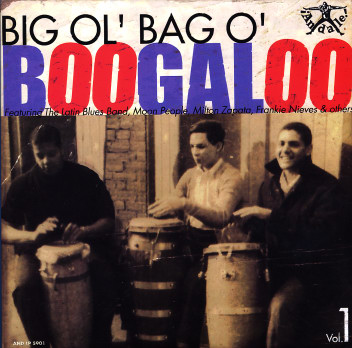
    From Take a Trip Pussycat (Speed, 196?). Also on Big Ol' Bag O' Boogaloo Vol. 1

    Willy Baby: Hot Buns
    From 7" (Ding Dong, 196/7?). Also on Big Ol' Bag O' Boogaloo Vol. 2

    Bruce Cloud: Soul Mambo
    From 7" (Motif, 196/7?). Also on Big Ol' Bag O' Boogaloo Vol. 3


    This isn't letting the cat out of the bag, but volume 2 of the Soul Sides Boxsets series will be boogaloo-themed. That's probably overdue on my part - I've done a few boogaloo-themed posts in the past, including a few podcast-style, but considering that it's one of those genres that I've focused an intense amount of attention on, that interest isn't necessarily reflected on this site. That's why I wanted to do a huge post on it for Uber but even then, it won't cover everything (btw, it should go live in early January).

    In the meantime, I wanted to fill people in on a few titles worth checking out, especially this intriguing "Big Ol' Bag O' Boogaloo" series that came out earlier this year. Unfortunately, it's vinyl only which won't help non-turntabled folks but for any DJ with an inkling of interest in Latin soul/boogaloo, the entire series is highly recommended. I got mine through Dusty Groove but it looks like they're out right now - but I think Andale has them.

    The deal with the BOBOB series is that most of the songs on here do NOT come from the usual suspects, i.e. Tico, Cotique, Alegre or Fania. Instead, they draw mostly on the smaller Speed label, one of those boutique Latin labels that collectors jones for. (The series claims to have titles from Ghetto Records, Joe Bataan's one-time project, but it's just one song (by Joe Acosta) so I consider the claim to be a bit suspect. There are, however, many songs not on Speed or the major Latin imprints, but these obscure one-offs (the Cloud 45, for example, is a $500+ piece). The series does repeat artists often - usually milking two songs off a single LP in order to stretch things out but the quality, overall, is very, very good, especially for beginning boogaloo fans.

    "I'll Be a Happy Man" is an interesting cut insofar as the Latin Blues Band uses the identical backing track as two other Latin titles: the Moon People's "Hippy Skippy Moon Strut" and Dave Cortez's "Happy Soul With a Hook." Out of the batch, if you like vocals, this Latin Blues Band is the version you want (if you prefer an instrumental, then the Moon People track is pretty great...it appears on Vol. 1 as well).

    "Soul Mambo" is a slick, classic-style boogaloo though, from what I understand, the track is also a hit in Northern Soul circles. Can't say I know much about Bruce Cloud at all but had this appeared on, say, a Cotique album, I wouldn't have blinked an eye; it just sounds so "of that era."

    "Hot Buns" by Willy Baby (another artist I know nothing about) is in Spanish, making me wonder if it originated in Puerto Rico though the sound is incredibly New York. The track is very raucous and the prominence of the guitar is unusual and a welcome surprise.

    All in all, the entire BOBOB series is nicely assembled; reminds me of those great Latin soul comps that came out on the UK's Harmless back in the early '00s (but have gone out of print since). Keep 'em coming....

    Labels:


    Monday, June 18, 2007

    DJ Rumor: Fania Live 01
    posted by O.W.


    DJ Rumor: Fania Live 01: From The Meat Market (Fania, 2007)
    The beautiful thing about having a love affair with music is that no matter how many good songs you already know, you can always be humbled by the infinite number of great songs you don't know. Case in point: this mix commissioned by Fania (or Emusica), mixed by DJ Rumor includes a bevy of kick ass Latin dance songs, many of which I already knew but a few I had never heard before and a few that I just plain slept on. The Joe Cuba Sextet's "Gimme Some Love" is a perfect example: I never picked up My Man Speedy before so I never heard this tune but once this boogaloo shifts midway through to bring in some classic piano vamps, I was hooked. Likewise, Acid is possibly my favorite Latin album ever...but I usually skipped past "Teacher of Love" and failed to appreciate how it was yet another excellent Latin soul cooker from Barretto (whose catalog only gets better to me with age). And likewise, I had heard "Pata Pata" before but never really listened to it, if you know what I mean.

    And just in general, I love the idea behind this mix series especially since it's not purely Fania-oriented but can include many of the other Latin labels that Fania has swallowed up over the years like Tico and Alegre. Definitely looking forward to the next volume.

    Labels: ,


    Tuesday, February 27, 2007

    Ricardo Ray: Back to the Boogaloo
    posted by O.W.


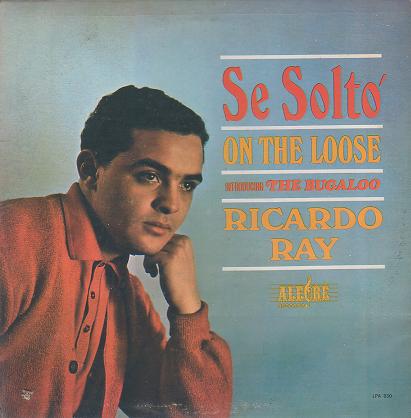
    Ricardo Ray: Danzon Bugaloo + Lookie Lookie
    From Se Soltó/On the Loose (Alegre, 1966)


    It's been a while since I wrote anything about the boogaloo but I've recently been researching it again for a paper I'm presenting in April. In the process of doing that, I realized that I had totally slept on one of the best resources ever written in regards to boogaloo history: Juan Flores' "Cha Cha With a Backbeat" which appears in his 2000 book on Puerto Rican American culture, From Bomba to Hip-Hop. I cannot overstate this: the essay is excellent and is a must-read for anyone with an abiding interest in the history of boogaloo.

    What's funny is that, in doing my own research, I ended up simply duplicating the work Flores had already done (just goes to show - it pays to read up on other people's work before embarking on your own sometimes), namely in identifying the "first" boogaloo song as coming off this Ricardo Ray album from 1966.

    Technically speaking, this is probably the first song labeled as a boogaloo but that doesn't mean that it's the first boogaloo song in terms of style. As Flores also notes, there's no shortage of antecedents to the boogaloo from the worlds of cha cha and guajiras and other proto-Latin soul styles. However, Ray was the first artist - it seems - to have consciously labeled what he was doing as a new Latin dance/rhythm known as "bugaloo" (interestingly, some people would go on to spell it "bugalu" or "boogaloo" but Ray's contraction of the two seems relatively unique.

    What's interesting about "Danzon Bugaloo" is how it doesn't quite conform to the musical "norms" we associate with boogaloo but perhaps that's the "danzon" influence. It may also be the fact that the song is a cover of "Whipped Cream" by Herb Alpert and the Tijuana Brass. You have to admit there is a deep, rich web of connections when a White musician trying to capture the sound of Mexico at the border would get covered by a Nuyorican, fusing Cuban dance with Black R&B lyrics and rhythms.

    However, though "Danzon Bugaloo" has its own eccentricities, there's no denying that "Lookie Lookie" lays down what would become a classic template for the boogaloo: a repeating piano muntono riff, English lyrics, an anchored, measured sense of percussion plus an added bonus of having the song swing into a higher tempo mid-way through. It's not the most scintillating boogaloo ever recorded but for the first attempt, it's more than laudable.

    Se Soltó, overall, is a great Latin album. I'm a little surprised if only because I didn't find Ray's next album, the better known Jala Jala Boogaloo to be quite as interesting or adventurous as Se Soltó.

    Labels: ,